
O Gauge Train Layouts: Getting Started
So, you’ve set up your first train set and have everything running smoothly. It’s an exciting first step into the world of model railroading, but for many hobbyists, it doesn’t take long before the urge to expand kicks in.
O Gauge train layouts offer endless possibilities, from simple oval tracks to detailed, multi-level miniature railroads. Whether you're running classic Lionel trains or modern MTH trains, building out your layout is where the hobby really comes to life.
Expanding Beyond Your Starter Set
Once you're ready to grow, the next step is understanding how O Gauge track systems work and how to design a layout that fits your space and vision. From additional curves and switches to elevated tracks and accessories, expanding your setup allows you to create a more dynamic and realistic railroad experience.
At Trainz, you can explore a full range of O Gauge model trains, track, and accessories to bring your layout ideas to life.
What You’ll Learn
In this guide, we’ll cover the fundamentals of O Gauge 3-rail track, including available O gauge track types, the best O gauge track, O gauge track comparison,s, basic layout design principles, and practical track plan ideas. You’ll also find inspiration and resources to help you transform your starter set into a fully realized model railroad.
Let’s get started building your O Gauge layout.
Comparing Lionel, MTH, Atlas, and GarGraves O Gauge Track Systems
Choosing the best O gauge track system depends on how you plan to build and run your layout. Some track systems are better for quick setup and floor layouts, while others are designed for realistic, permanent model railroad builds. Lionel FasTrack and MTH RealTrax are popular choices for beginners because they feature built-in roadbed and easy snap-together assembly. Atlas O and GarGraves track are often preferred by hobbyists building more detailed, custom layouts thanks to their realistic appearance.
Traditional Lionel O gauge tubular track and O27 track remain favorites for collectors and operators who enjoy a classic three-rail look. Meanwhile, GarGraves Phantom T and Phantom S offer a cleaner appearance with concealed center rail designs. If your goal is ease of use, RealTrax and FasTrack are strong options. If realism, flexibility, and customization matter most, Atlas O and GarGraves are often better fits for permanent O gauge train layouts.
Types of O Gauge Track
All O Gauge track shares some common characteristics. All 3-rail O Gauge track has three rails, spaced evenly apart, with the outer rails 1 ¼ inches apart. All 3-rail O Gauge track is configured so the middle rail provides the positive, or “hot,” power to the train, while the two outer rails are grounded. The advantage of this system becomes even more evident when building more complex layouts. With very few exceptions, trains made by O Gauge train manufacturers will work on one another’s track.
Most 3-rail O Gauge track is sectional, meaning the pieces are rigidly constructed in a certain length or curve diameter. All types of track are made in a variety of curve diameters, and most lines offer a variety of switches and crossing sections. Some manufacturers also offer flexible track sections, which can be bent to a variety of curvatures.
However, different types of track normally do not connect together without the use of adapter tracks. These differences are usually due to the level of detail the track has and its method of construction. Below are some of the major O Gauge track systems on the market.
Lionel O Gauge Track Systems

Lionel track systems include three main O gauge options: FasTrack, traditional tubular O gauge track, and O27 track. These systems offer a range of styles, from easy-to-assemble modern track to classic designs suited for both temporary and permanent layouts.
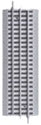
FasTrack
Introduced earlier this decade, FasTrack has become Lionel’s primary track line and is now standard in all Lionel train sets. It is the first complete new track system Lionel introduced since 1957, and it quickly gained popularity due to its ease of assembly, attractive appearance, and wide variety of available pieces.
FasTrack differs from earlier Lionel track types by having a built-in roadbed, which enhances the appearance of the track by simulating the gravel bed of real railroad tracks. More importantly, FasTrack clips together in a fashion similar to slot car track, making it ideal for use on a floor or carpet. Of course, it also looks great on permanent layouts. Our display layout uses FasTrack. If you're also a FasTrack user, check out our guide to Lionel FasTrack.
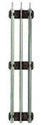
O Gauge Tubular
The granddaddy of them all, Lionel has made O Gauge track since 1915, and today’s O Gauge track looks almost exactly like the track that rolled off the assembly lines in the 1950s. When people talk about an old train set with three-rail track, this is usually the type they mean.
O Gauge track is all metal, usually with three crossties per section. It uses rounded, removable pins to connect the track sections together. O Gauge track is very easy to work with and can be cut into a variety of lengths if needed. If you want a classic, nostalgic look for your layout, O Gauge is certainly worth a look.
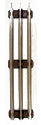
O27 Gauge
One of the most common questions we get at Trainz is, “What is the difference between O and O27?” O27 was introduced during the Great Depression as a way to make train sets less expensive and more affordable. O27 track is the same width as O Gauge track and is made in much the same way: all metal, usually with three crossties per section.
However, O and O27 track do not connect directly. Despite the identical track width, O27 has smaller crossties, a lower profile, and slightly narrower rails, so the track pins are different sizes. O27 also has one key disadvantage: due to its tight turn radius, not all engines and cars will run on it.
Note: If you just brought your old set out of the attic and are trying to determine whether you have O or O27 track, lay a piece of the track on a table. If you can look through the bottom of a crosstie and see through to the other side, it is O. If the end of the crosstie has a piece of metal bent down preventing you from looking through it, it is O27.
O27 was Lionel’s standard starter set track from the late 1930s until 2002, when FasTrack replaced it. O27 is still available.
MTH O Gauge Track Systems

MTH track systems include two primary O gauge options: RealTrax and ScaleTrax. Both are designed for reliable performance, with RealTrax offering easy snap-together assembly and built-in roadbed, while ScaleTrax focuses on a more detailed, realistic appearance for permanent layouts.
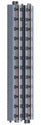
RealTrax
RealTrax is MTH’s primary track line and is included with all MTH starter sets. RealTrax is similar to FasTrack, and its popularity was one reason Lionel introduced FasTrack. RealTrax first hit the market in the 1990s.
Like FasTrack, RealTrax has a built-in roadbed and also snaps together, making it perfect for layouts set up on a floor or carpet. Unlike FasTrack, RealTrax has a blackened middle rail, helping to camouflage it a bit.
MTH includes a CD-ROM with RealTrax layout design software in every set. We used this software to produce some of the layouts seen below.
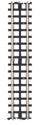
ScaleTrax
ScaleTrax is MTH’s other track line. Designed with permanent layouts in mind, ScaleTrax has smaller rails, more crossties, and is very realistic looking. Many hobbyists consider it the most realistic 3-rail track on the market.
Atlas O Gauge Track System

Atlas O Track is a highly versatile O gauge track system known for its realistic appearance and wide variety of components. With sectional and flexible track options plus an extensive range of switches and crossings, it’s ideal for building detailed, custom layouts with smooth operation and strong performance.
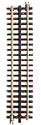
Atlas 3-Rail
Atlas is one of the oldest names in the train business and entered the 3-rail world about a decade ago. Atlas calls its track the 21st Century Track System, and it is arguably the most flexible of all 3-rail track systems.
There are more types of straight, curved, switch, and crossing sections available in Atlas O than in any other 3-rail track line. Flexible track sections are also available.
Atlas also offers free downloadable layout design software on its website, and we used it to produce some of the layouts seen below.
GarGraves O Gauge Track Systems
GarGraves track systems include Phantom T and Phantom S, two O gauge options designed for realistic appearance and dependable performance. Both use a concealed center rail for a cleaner look, making them strong choices for traditional and highly detailed permanent layouts.
Phantom T
GarGraves Phantom T Track offers a traditional tinplate-style O gauge track system featuring a hidden center “phantom” rail that provides dependable three-rail performance. As part of the Phantom Tinplate line, it includes sturdy steel rails along with specialized switches, bumpers, and pre-wired accessories, making it a great choice for creating classic layouts with a cleaner, more realistic look.
Phantom S
GarGraves Phantom S Track is a premium O gauge track system that combines realistic appearance with reliable performance. Its hidden “phantom” center rail delivers consistent power without the look of a traditional third rail, making it ideal for modelers seeking both authenticity and function.
Choosing the Right O Gauge Layout Design
The best O gauge layout design depends on your space, budget, and how you want to run your trains. Smaller layouts often use loop or figure-8 designs, while larger spaces allow for more realistic point-to-point or loop-to-loop layouts. Thinking about your goals early will help you choose the right track plan and avoid costly changes later.
Developing an O Gauge Track Plan
Planning your O gauge train layout is one of the most important steps in building a successful model railroad. The best advice we can provide is this: PLAN YOUR LAYOUT BEFORE BUILDING IT.
Taking the track out of the box and ‘winging it’ can be fun, but there is nothing more frustrating than getting your track almost set up and then realizing you’re one straight track short, or that you bought a right-hand switch instead of a left. Planning ahead helps ensure you have enough track—without buying too much—and that your buildings, trackside accessories, and other layout elements will fit your space properly.
With modern track planning software, designing your layout can also be part of the fun. The first step is deciding what type of O gauge track plan or layout design you prefer. Most O gauge track plans and model train layout ideas fall into five basic types:
► Loop [Continuous] Layouts

This is the conventional layout plan, where the main line is arranged in a continuous loop, and the train starts at one point, completes a lap, and eventually returns to its starting point. Many times the loop is folded over itself, creating a figure 8, and parts of the loop can be elevated to pass over each other. If you like getting the trains cranked up and watching ‘em roll, the loop design is a great choice.
► Point to Point

Loop layouts are simple and fun, but less realistic than real-world railroads. If you want to make your layout resemble the real thing, and you’re not modeling the Walt Disney World Railroad, you’re going to be hard-pressed to find a real railroad that runs in a circle. Real railroads are massive transportation factories, moving people and goods from this spot to that spot, in [usually] an efficient manner. Many modelers like to build their layouts to simulate this action. This is known as operation—making a model railroad imitate the operations and schedules of a real railroad. The point-to-point railroad is the most realistic model railroad design. The trains move from Point A to Point B, usually making stops along the way.
Model railroaders working in the smaller scales [HO and N] often build point-to-point railroads. But in O scale, there is a problem. It’s hard to build a true point-to-point O Scale railroad that provides a reasonable length of travel for the train. Unless you have a gymnasium available, building a true point-to-point layout in O is normally out of question.
► Loop-to-Loop

So what to do if you want something a bit more interesting than a loop layout, but do not have enough space to build a point-to-point layout? Do what model railroaders have been doing for years—cheat a bit.
Loop-to-Loop is a variation of the continuous loop layout that hides the continuous nature of the operation. The train moves from point A to point B, but both points have reverse loops that turn the train around and send it back from point B to point A without stopping. Often, on loop-to-loop layouts the reverse loops function as terminals and have yards built into the reverse loops. Loop-to-Loop allows for a layout to be run either as a point-to-point layout for realistic operation, or as a continuous loop layout for display or showing off.
► Out and Back

Another popular design in the smaller scales, the out-and-back is a clever design that sends the train out of its starting point, and at some point it reverses direction and returns to its starting point going in the opposite direction. Many out-and-backs have a continuous operation feature built into them to permit the train to make several laps and ‘build up some mileage’ before returning home.
► Point to Loop

A hybrid of the other four layout types, Point to Loop is a continuous loop layout with two spur lines functioning as starting and ending points for the railroad. This design and the out-and-back are often used if the train room dictates the construction of a narrow shelf on one side.
Each type of O gauge layout offers different benefits. Loop layouts are best for continuous running and display, while point-to-point layouts focus on realistic operation. Loop-to-loop and out-and-back designs offer a balance between realism and continuous movement, making them popular choices for many model railroaders.
Choosing an O Gauge Track Plan
Several factors go into developing a layout plan.
First and most important is to ask yourself ‘what do I want my trains to do?’ If you want lots of trains moving at high speeds for hours on end, you’ll want a very different design than someone who wants to model a short line with slow moving trains.
Second is to decide on the type of track you want to use. While all O Gauge track is similar, the different manufacturers make different curve diameters available. For instance, the minimum curve diameter with FasTrack is 36 inches, while with Realtrax, it’s 31 inches. Therefore, a 180-degree turn with FasTrack is going take up almost an extra half a foot of real estate.
The third consideration is the layout room itself. Layouts usually share space with household items like water heaters, doorways, windows, workbenches, cars, etc.
O Gauge Track Plans
Now the fun begins—exploring O gauge track plans and layout ideas you can use as inspiration for your own model railroad.
But first, a quick note about the designs:
These layouts were drawn using two types of software—MTH’s Railware software for Realtrax, and Atlas O’s Right Track software. Unfortunately for FasTrack users, Lionel has not yet released track design software for it. If you are using FasTrack, the layouts will need to be refigured a bit.
These plans are very accurate, but some spots, particularly in yards, may not fit exactly as we have them in our plans. Places where there is a 4.25 inch section may require a 5 inch section, and so on. We intend for these plans to serve as starting points and inspiration [feel free to borrow/steal these ideas as much as you want].
O Gauge Track Plan Ideas by Layout Size
O gauge track plans can vary widely depending on the space available. Smaller layouts typically focus on compact loop or figure-8 designs, while larger layouts allow for more complex operations, multiple trains, and more realistic routing. Below are several layout ideas grouped by size to help you find the right fit for your space.
Small Layouts
► The Double Loop RR

This simple but fun line uses one pair of switches, a 90 degree crossing, and a few more curved and straight track sections in addition to what is included with a starter set. The train can take two different lines with a ‘junction’ at the crossing.
Dimensions:
MTH Realtrax and conventional O Gauge track: 6 by 6 feet
FasTrack: Approximately 7 by 7 feet
► The Twice Around RR
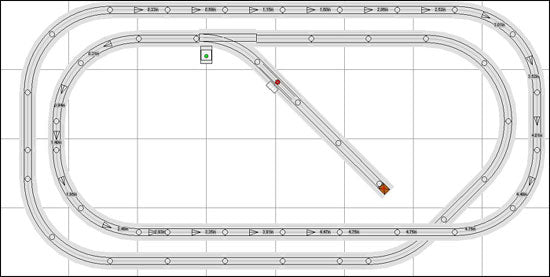
One of the most popular additions to a train set is a trestle set, allowing the train to climb and descend grades and cross over itself at some point. The most popular form of over and under layouts is a figure-8 configuration, but this plan has some advantages over a figure-8. For one, it takes up less space [if you’re using FasTrack] and actually provides a slightly longer run for the train per lap. Also, on over-and-under Figure-8s, much of the track on the grades is in the curves, increasing the chance of an accident. In this plan, more of the grades are on straightaways.
Dimensions:
MTH Realtrax and conventional O Gauge track: 4 by 8 feet
FasTrack: Approximately 5 by 9 feet
► The Double-Back RR

A neat plan using 3 pair of switches, the Double-Back provides a variety of routes for the train to take. The reversing loops allow the train to change direction. The rear passing siding can also be used to store extra cars.
Dimensions:
MTH Realtrax and conventional O Gauge track: 4 by 8 feet
FasTrack: Approximately 5 by 9 feet
► The Phone Booth Terminal RR

Nicknamed after the old college prank of cramming people into a phone booth, the PBT pushes the maximum amount of action that can be placed on a conventional 4 by 8 sheet of plywood. With a figure 8, to spur sidings, a long passing siding, and a variety of routes, the PBT will operate much bigger than it appears.
Dimensions:
MTH Realtrax and conventional O Gauge track: 4 by 8 feet
FasTrack: Approximately 5 by 9 feet
► The Savannah Terminal


This layout is an example of a small operator’s layout that builds several sidings into a basic figure 8. Basically the ST consists of a two-track yard in the lower right, a short industrial spur in the lower left, and a two-track industrial siding [I envisioned a pier scene when drawing it up] in the upper left. The train leaves the yard and drops off and picks up cars at the two stops. Note that the configuration of the sidings makes having an engine with a front coupler essential, in order to push cars into the tracks in the upper left.
Dimensions:
MTH Realtrax and conventional O Gauge track: 5 by 7 feet
Atlas O and FasTrack: 7 by 8 feet
Medium-Sized Layouts
► The Buford and Eastern


The Buford and Eastern is a basic out-and-back layout. It can accommodate two trains easily, with one parked on one of the sidings while the other is operating, or can provide interesting operation for one train as well.
If running one train, a typical ‘schedule’ would work like this: The train leaves on the lower of the two sidings at the top of the layout, and heads out onto the main loop. It drops off and picks up cars along the way at the short sidings on the route. When it’s ready to head home, the train heads through the diagonal cutoff, reversing direction and pulling into the upper siding at the top of the layout, completing its ‘trip’. The two switches connecting the sidings at the top allow the engine to uncouple from the train, back down the other siding, and connect onto the back of the train to rearrange it for the next trip. This arrangement is known as an ‘escape track.’
Given their bi-directional nature, diesels would work better on this layout; if you use a steam engine, you’ll need to break out the old manual turntable (better known as your hand) to turn the engine around after each trip.
Dimensions:
All makes of track: 5 by 9 feet
Room-Sized Layouts
► The Spare Room Central Railroad


A mid-sized layout that allows the operation of two trains, the Spare Room Central is intended to fit into an average size spare bedroom, 9 by 9 or 10 by 10 feet. Utilizing the out-and-back principle for getting in and out of the yard at the lower right, the SRC also features a nice mainline run and several sidings, as long as a passing siding along the backstretch. The key feature to the design is the ‘wye’ where the yard meets the mainline. A wye is a three-legged track arrangement that allows engines to reverse themselves without using a turntable. (Look at the track arrangement and imagine turning a car around in a driveway, and you’ll get the idea). On this layout the wye also allows the trains to head on to the mainline in either a clockwise or counterclockwise direction, and to return to the yard without needing to reverse direction. Using a reasonable amount of track—12 switches in all—the SRC gives the feel of a big railroad without the need of investing a lot of space.
Dimensions:
MTH Realtrax and conventional O Gauge track: 9 by 9 feet
Atlas O and FasTrack: 10 by 10 feet
► The Southern Railway


This plan is an example of the impact of using wide-radius curves on a layout. The plan using Realtrax software uses O42 curves and occupies a space 12 by 12 feet. The other plan, however, uses Atlas O54 and O63 curves and takes up 15 by 17 feet [if using FasTrack, use O48 for the O54 and O60 for the O63, and the plan should fit a 14 by 16 space]. Both plans are essentially the same, with a large over and under figure-8 connected to a pair of reverse loops, with a yard at the lower right and some sidings along the way. Also, note how using O54 switches on the Atlas plan allows for the closer spacing of sidings than with O42 switches on the MTH plan. This is a plus in the tradeoff between short and wide-radius track.
This plan leaves a fair amount of open space for scenery and buildings. Instead of using trestles, the over and under component should be built using plywood risers, allowing the up and downgrades to be integrated into hills or mountains.
Dimensions:
MTH Realtrax and Conventional O Track: 12 by 12 feet
Lionel FasTrack: Approximately 16 by 16 feet
Atlas: 18 by 18 feet
► The Pennsylvania Railroad

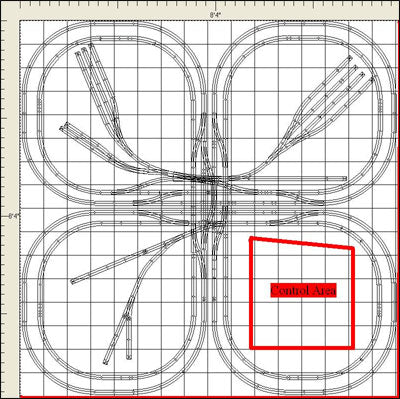
One of the most revered chapters in railroad history was the construction of the massive four-track mainlines by the eastern trunk railroads, particularly the Pennsylvania Railroad and the New York Central System. This plan provides the action of a 4-track main in a reasonable 16 by 16 foot area. Looking more complicated than it really is, the PRR is basically one doubled over figure-8 inside another one. The multiple crossovers allow for moving between the two lines and for trains to reverse direction.
The four lobes created by the loops are used for four different purposes. The lower right is for the control panel and operator’s area [it’s also recommended to leave a 2-foot access way on at least 2 sides, and preferably 3]. The upper right lobe is for a passenger terminal, the upper left is a small freight yard and engine servicing area, and the lower left is a mine or industrial area. With the variety of loops and routes, command control would be a perfect fit for this layout, allowing 2 or 3 trains on each loop without the need for blocks and other wiring complications.
This layout does have a couple drawbacks. First and foremost is that in order to get the vertical mainline over the horizontal mainline, nearly all of the curved sections of the mainlines need to be on grades. Also, the yard areas are a bit small for a layout of this size. It is complex—the Atlas plan uses 32 switches.
But you’ll never be bored!
O Gauge Track FAQs
What is the difference between O gauge and O scale?
O gauge refers to the width of the track, while O scale refers to the size of the train in proportion to the real thing. In the U.S., O scale is typically 1:48. Many hobbyists use the terms interchangeably, but “O gauge” usually refers to traditional 3-rail trains and track systems.
How wide is O gauge track?
Standard O gauge track measures 1 1/4 inches between the outer rails. This gauge is used by traditional 3-rail O gauge trains and many O scale trains that run on O gauge track.
Is O27 the same as O gauge?
O27 is a type of O gauge track, but it is not exactly the same as traditional O tubular track. Both share the same general gauge, but O27 has a lower profile and tighter curves, so some larger locomotives and cars may not run well on it.
What do O27, O36, O48, and O72 mean?
These numbers usually refer to the diameter of the curve in inches. For example, O27 track forms a 27-inch-diameter circle, while O72 forms a 72-inch-diameter circle. Larger trains generally need wider curves for better operation and appearance.
Can Lionel, MTH, Atlas, and GarGraves trains run on the same O gauge layout?
Many 3-rail O gauge trains from major brands can run on the same layout if the track gauge, power setup, and curve size are suitable. The larger issue is usually connecting different track systems, since some brands require transition or adapter pieces.
What is the best O gauge track for beginners?
Lionel FasTrack and MTH RealTrax are popular beginner choices because they are easy to assemble and include built-in roadbed. Atlas and GarGraves are often preferred for more customized or permanent layouts, while traditional tubular O gauge track remains a classic option.
What is the difference between 3-rail and 2-rail O scale track?
3-rail track uses a center rail for electrical pickup and is the most common setup for traditional O gauge layouts. 2-rail O scale track removes the center rail for a more realistic appearance, but it usually requires more scale-specific equipment and more advanced layout planning.
What is flex track?
Flex track can be bent into custom curves instead of being limited to one fixed radius. It is commonly used on permanent layouts where builders want smoother track flow and a more realistic appearance.
How much space do I need for an O gauge layout?
The amount of space depends on the curve diameter, track system, and size of the trains you want to run. Compact traditional layouts can fit on a small table, while broader curves and scale-sized locomotives need much more room.
Do different O gauge track systems connect together?
Not always. Some O gauge track systems connect directly, while others need transition or adapter sections. If you plan to mix FasTrack, RealTrax, Atlas, GarGraves, or tubular track, it is best to confirm compatibility before building your layout.